

The modern industries are changing the way they operate as a result of automation. From manufacturing plants to hospitals and digital services, smart systems are helping organizations perform their activities in a safer, more convenient, and quicker manner. Automation Technology Explained simply refers to the use of intelligent machines, software, and related systems to perform tasks that were previously handled by human beings.
The present world is putting a strain on businesses to ensure heightened productivity at minimal costs of operation. This is a practical solution to automation as machines and digital systems can be used to deal with repetitive processes, which are precise and consistent. Human expertise is not lost with automation, but when applied properly, it will complement it by enabling individuals to be engaged in work of higher value which includes solving problems, planning and innovation.
The concept of automation technology is relevant to the business not only to students, professionals, and people interested in learning about the technological future, but to the entire world, which is already undergoing significant changes in its key sectors.
Herein this comprehensive guide we will talk about the automation concept, the advantages that it brings and the top eight industries that are already adopting smart automation systems to enhance efficiency and reliability.
Automation Technology Explained: Exploring the Basic Concept
Before considering the applications in real-life situations, it is essential to know what is the basis of automation.
Automation is the application of machines, control systems and software algorithms to work automatically with limited involvement of a human operator.
Important Automation System Components
In the majority of cases, automation environments are based on the following combinations of technologies:
Sensors and Data Collection
Information that is collected via sensors includes temperature, movement, pressure, or location. Intelligent response of automated systems is supported by this data.
Control Systems
Decision-making and analysis of incoming information is done by control units. Industrial computers and Programmable Logic Controllers (PLCs) are the usual ones.
Robotics and Machines
Physical automation can involve robots or special equipment that is used to carry out specific mechanical tasks accurately.
Artificial Intelligence and the machine learning
Newer automation is becoming more largely AI-driven to interpret trends and forecast results, as well as optimize processes.
Cloud and Data Platforms
Numerous intelligent systems transmit operational information to the cloud in order to monitor, analyze, and optimize it.
These factors can be understood to explain how automation is applied in various industries.
For further understanding of automation technologies you can also explore this educational resource:
The Functionality of the Automation Technology in Manufacturing
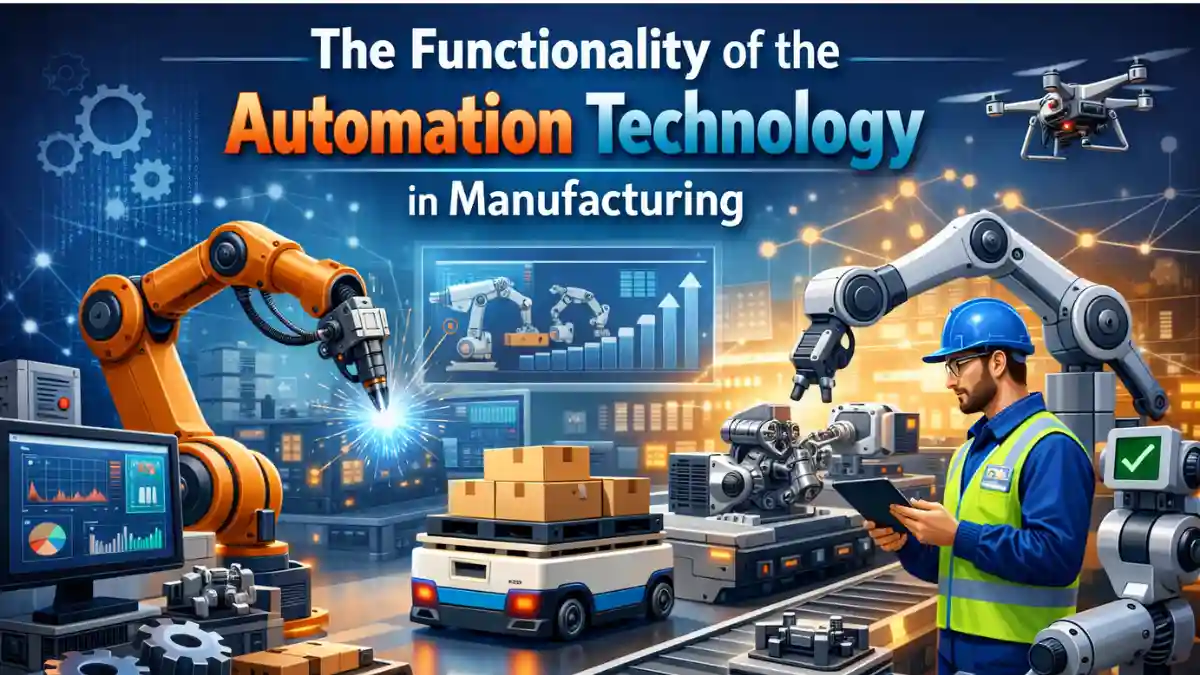 One of the first and the most developed users of automation technology is manufacturing.
Robots have taken over the work of factories with the use of assembly lines, automated quality control systems, and intelligent systems of production monitoring.
The functioning of Smart Manufacturing
Automated manufacturing systems have the ability to carry out:
Precision welding
Product assembly
Packaging
Quality inspection
Inventory tracking
An example of one such application is the use of robots on assembly lines to assemble electronic components or cars with a level of precision extremely high.
Benefits in Manufacturing
Automation assists the manufacturers:
Increase production speed
Reduce product defects
Improve worker safety
Reduced operating long-term costs.
Predictive maintenance systems are also used to monitor issues of a machine before it breaks down in modern smart factories.
The Functions of Automation Technology in the Healthcare Industry
Automation is becoming popular in healthcare with the aim of enhancing patient care and operations.
Smart systems can help in numerous significant procedures of doctors, nurses, and hospital employees.
The most Important Areas of Automation in Healthcare
Automation is applied in hospitals in such sectors as:
Laboratory testing
Patient data management
Pharmacy dispensing systems Dispensing systems Pharmacy dispensing systems are computerized systems that help in filling out prescriptions smartly and efficiently without involving the personal judgment of the pharmacist (Sullivan, 1996).
Medical imaging analysis
Hospital logistics
As an example, automated lab machines have capabilities of running blood samples in a much faster rate compared to manual analysis.
Medical Professionals Benefits
Healthcare automation is beneficial:
Reduce medical errors
Enhance the accuracy of diagnosis.
Time-saving among medical workers.
Speed up laboratory results
Where human doctors are still necessary in the workflow, automation offers effective assistance mechanisms.
Transportation and Logistics Automation Technology
Transportation and logistics companies operate intricate networks of supply chains, warehouses and vehicles. They can be more efficiently worked with the help of automation.
Smart Logistics Systems
Automation is generally applied in:
Warehouse robotics
Route optimization
Inventory management Automated inventory management.
Shipment tracking systems
Delivery scheduling
Autonomous robots have become common in large warehouses and they have the role of moving products around the storage facilities.
Automation and its Effect on Logistics
Automation enables the logistics firms to:
Deliver products faster
Reduce shipping errors
Enhance warehouse profitability.
Track goods in real time
Such advancements are imperative to the contemporary e-commerce and worldwide supply chains.
The application of Automation Technology in Agriculture
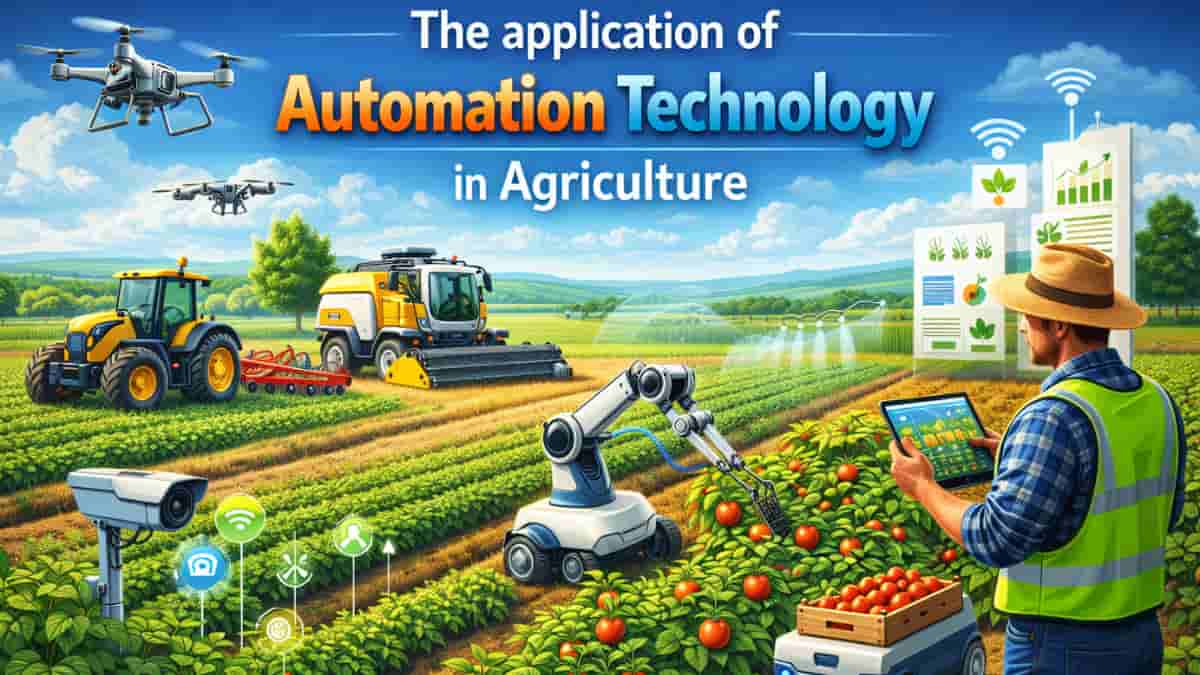 Smart farming systems are transforming Agriculture into a technological one.
Automation of crop production is currently being adopted by farmers to save on manual work.
Agricultural Automation examples
Some of the common technologies in smart farming include:
Automated irrigation systems.
Drone-based crop monitoring
GPS-guided tractors
Soil sensors
Smart harvesting equipment
As an illustration, soil sensors are able to detect the moisture content and automatically switch on irrigation systems when they are required.
Benefits for Farmers
Automation helps farmers:
Save water resources
Improve crop yields
Reduce manual labor
Supervise big farms effectively.
These technologies find particular use in large farming businesses.
Retail and E-Commerce Technology Automation
Automation plays a significant role in the retail business to handle inventory, selling systems, and customer experiences.
Automation in Modern Retail
Retail automation involves the following systems:
Self-checkout kiosks
Automated inventory tracking Inventory tracking is likely to be the most demanding part of the tracking process, but it is essential since there are products that can be easily disposed of without the necessity of re-inventory them again.
Intelligent recommendation systems.
Digital payment processing
Warehouse automation
Automation is applied in online stores to suggest products depending on the way customers interact within the stores.
Pros to Retail Businesses
Automation will help retailers to:
Enhance customer experience.
Reduce checkout times
Keep stocks at the correct level.
Analyze customer trends
This is a data-driven strategy that enables companies to be more intelligent.
Automation Technology Explained in Banking and Financial Services
Banking institutions receive huge amounts of transactions in a single day. Automation assists them to be accurate and secure.
General Banking Automation Systems
Banks apply automated tools in:
Transaction processing
Fraud detection
Identity verification of customers.
Loan processing
Financial data analysis
Fraud detection systems are automated and keep track of transactions and suspicious activity.
Automation is relevant in finance because of the following reasons
Automation allows banks to:
Fast with process transactions.
Enhance security surveillance.
Reduce human errors
Improve speed of customer service.
Robotic process automation (RPA) is also applied by many financial institutions to deal with repetitive administrative tasks.
For more information about how automation is shaping industries you can also read this educational resource: