
Internet has become an unavoidable aspect of life. Online banking and education, social media and distance work are only some examples of how nearly everything has been placed on digital platforms. With the emerging technology, the risks are increasing. It is true that the criminals are getting more sophisticated, data breaches are on the rise, and even the common user is getting bigger targets either in scams, counterfeit websites, or social engineering. That’s why following clear and practical online safety rules is not just a choice anymore it’s a necessity.
Online safety in 2026 will not simply be the use of antivirus packages. It entails consciousness, intelligent decision-making, and good-digital-citizenship. There is a widespread opinion that cyber threats are only relevant to large corporations or tech specialists, but in fact, ordinary users are most often attacked. Any irresponsible tap or a weak password is enough to jeopardize personal information, money and even identity.
This detailed guide is created to help you easily understand and use the most important online safety rules in a clear and practical manner. These principles can be used by students, businesspeople, parents, and casual internet users alike to form safer digital habits, gather adequate personal information, and browse the online environment with certainty, as well as help you to zest to the online world.
Use Powerful and Special Passwords All Over
Why Password Security Remains Important
The initial level of protection against unauthorized access is passwords. Although there is increased security technology, one of the leading causes of account breakages is still weak or reused passwords.
Best Practices on Strong Passwords
-
Use at least 12-16 characters
-
Use symbols, numbers, upper and lower-case letters
-
Do not use name, date or general words
-
Always use a different password in different platforms
Practical Example
When a single social network is breached and you have the same password on email or banking you can now be communicating on several accounts within just a few minutes.
Actionable Tip
Make use of a reliable password management tool to create and keep passwords of a unique kind.
Use Two Factor Authentication (2FA) In any case
The Benefits of 2FA to Online Security
Two-factor authentication takes an additional step to verify that it is you, and it is a big step towards preventing account takeovers.
Common Types of 2FA
-
SMS/ email verification codes
-
Authentication apps
-
Biometric verification
Real-World Scenario
They cannot use the passwords to log in even after stealing it via their phishing technique because they have to complete the second authentication.
Actionable Tip
Always select app based authentication rather than the SMS where possible to leverage better security.
Take Care of Messages, Links, and Emails
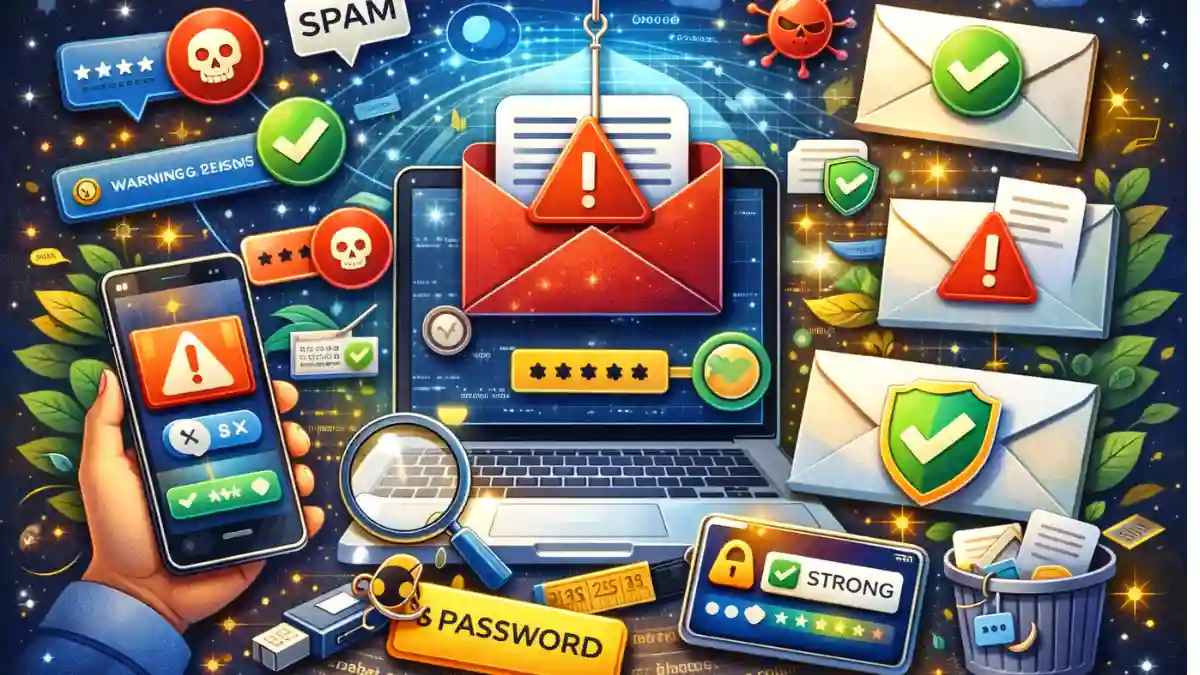
Understanding Phishing in 2026
Phishing attacks have become more realistic than ever. Many spoof emails and messages tend to be received as an official email of a company or an acquaintance.
Warning Signs to Watch For
-
Urgent language or threats
-
Demand of personal data
-
Untrustworthy connections or attachments
-
Minor mistakes in the spelling of sender addresses
Practical Example
A phishing attack is often an email that states that your account is going to be shut down unless you confirm it by the deadline.
Actionable Tip
Do not follow links on emails. Instead, pay a visit to the official web site.
Make sure that You update your devices and software
Why Updates Are Essential
Software updates work not only with new features, but also with security vulnerabilities which attackers indeed actively take advantage of.
What to Update Regularly
-
Operating systems
-
Browsers
-
Mobile apps
-
Virus and firewall software
Practical Example
Obsolete software can have known vulnerabilities that can be exploited automatically by the hacker.
Actionable Tip
Make automatic updates automatic on any devices that you can.
Make Reliable and Sensitive Internet Connections
Risks of Public Wi-Fi
Wi-Fi networks of the type that are used publicly tend to be unsecured and thus can be easily intercepted.
Shopping Safely on Public Networks
-
Never log in to accounts that are sensitive
-
Never enter payment details
-
Use encrypted connections
Practical Example
Listening to your bank account via a public Wi-Fi system may reveal the login credentials.
Actionable Tip
Access the internet through a reputed VPN on the public networks.
Control what you Disclose personallity on the Internet
How Oversharing Became a Liability
Identity theft or targeted scams or account recovery attacks can be done with personal information that is shared online.
Examples of information that you should keep secret
-
Full address
-
Phone number
-
Date of birth
-
Personal routines
Practical Example
Leaving their travel arrangements on the internet is an indicator that your house is not occupied.
Actionable Tip
Check privacy control on social media frequently and limit the visibility.
Only Download Apps and Software and in a Trusted Source
The Risk of Fake Apps
As malicious apps are usually camouflaged as useful applications, they are built to steal information or to show intrusive advertisements.
Safe Download Practices
-
Use official app stores
-
Read user reviews
-
Check information developer
Practical Example
A fraudulent utility program can ask to be granted access to superfluous permissions and monitor your activity.
Actionable Tip
Uninstall the apps that you do not use and check the permissions of the apps on a regular basis.
Education Online Scams and Trends
Why Awareness Matters
Scam methods are continuously developed. One of the strongest ways of applying internet safety is to keep oneself informed.
Common Scams in 2026
-
Fake job offers
-
Impersonation scams
-
Subscription traps
-
AI-generated fraud messages
Practical Example
Fraudsters can use chat messages that sound natural to pose as customer care representatives.
Actionable Tip
Reliably follow technology and consumer protection materials to keep up.
Learn more about online scams and consumer protection from:
Keep Children and Family Members Safe on the Internet
It is a Community Response to Family Online Safety
Lack of awareness among children and the elderly users makes them more susceptible to the online risks.
Practical Safety Measures
-
Use parental controls
-
Discuss online risks openly
-
Watch television, Internet use
Practical Example
Games or social platforms also make children share their personal information without knowing.
Actionable Tip
Make a digital safety plan of a family and analyze it.
Additional family online safety guidance is available at:
Think Before You Click, Share or Trust
The Rule of Online Safety: The Most Important
The best defense is critical thinking, although technology will help.
Questions to Ask Yourself
-
Is this source trustworthy?
-
Does this request make sense?
-
Do they think they are pressuring me to move fast?
Practical Example
Through emotional responses such as fear or excitement, scammers use them.
Actionable Tip
Think, check before acting on the Internet.
Opinion Leader: Developing a Long-term online safety mindset
Online safety is not an immediate set up but an evolving process. Specialists believe that when users implement the awareness-based habits and merge them with technical protection, the risk of becoming a victim of cyber threats is reduced significantly. Once online security is considered a routine aspect of online digital hygiene, just like locking the house or wearing a seatbelt.
Most Frequent Online Safety Errors
-
Reusing passwords
-
Ignoring software updates
-
Trusting unknown links
-
Oversharing on social media
-
Assuming “it won’t happen to me”
Avoiding these pitfalls, in general, can greatly enhance your general online protection plan.
Advantages of Practicing Online Safety Rules
-
Less vulnerability to identity theft
-
Improved security of personal and financial information
-
Feeling more confident when using the digital platform
-
Increased security in online matters among families
Maintaining safe browsing habits regularly helps ensure long-term digital health and security.
Frequently Asked Questions (FAQ)
Why do online safety rules matter so much in 2026?
This is due to the advanced nature of cyber threats, which are aimed at the normal user.
Is it sufficient to have free security tools?
They are a plus, but consciousness and action are also equally important.
What is the frequency of changing passwords?
In case of compromise or in case you feel something is not right.
Is public Wi-Fi always unsafe?
It must not always be used but should be done with care.
Are security practices on the Internet effective in avoiding fraud?
Of course informed users have much lower risk of falling victim.
Conclusion
In 2026, following online safety rules is not just about preventing risks it’s about gaining confidence and maintaining control in an increasingly digital world. With awareness, smart habits and fundamental security measures, you can have a long way to go in lessening the risks and reaping the rewards of the internet without any hassles. The internet is a collective responsibility and every little bit you do today builds your future in cyberspace.